The desert by train: Jaipur, Jodhpur, Jaisalmer
The railway west from Jaipur runs through farmland, scrub and then real desert to Jaisalmer, where sand drifts onto the platform. By day it is a moving window on Rajasthan; by night, a berth and a dawn arrival.
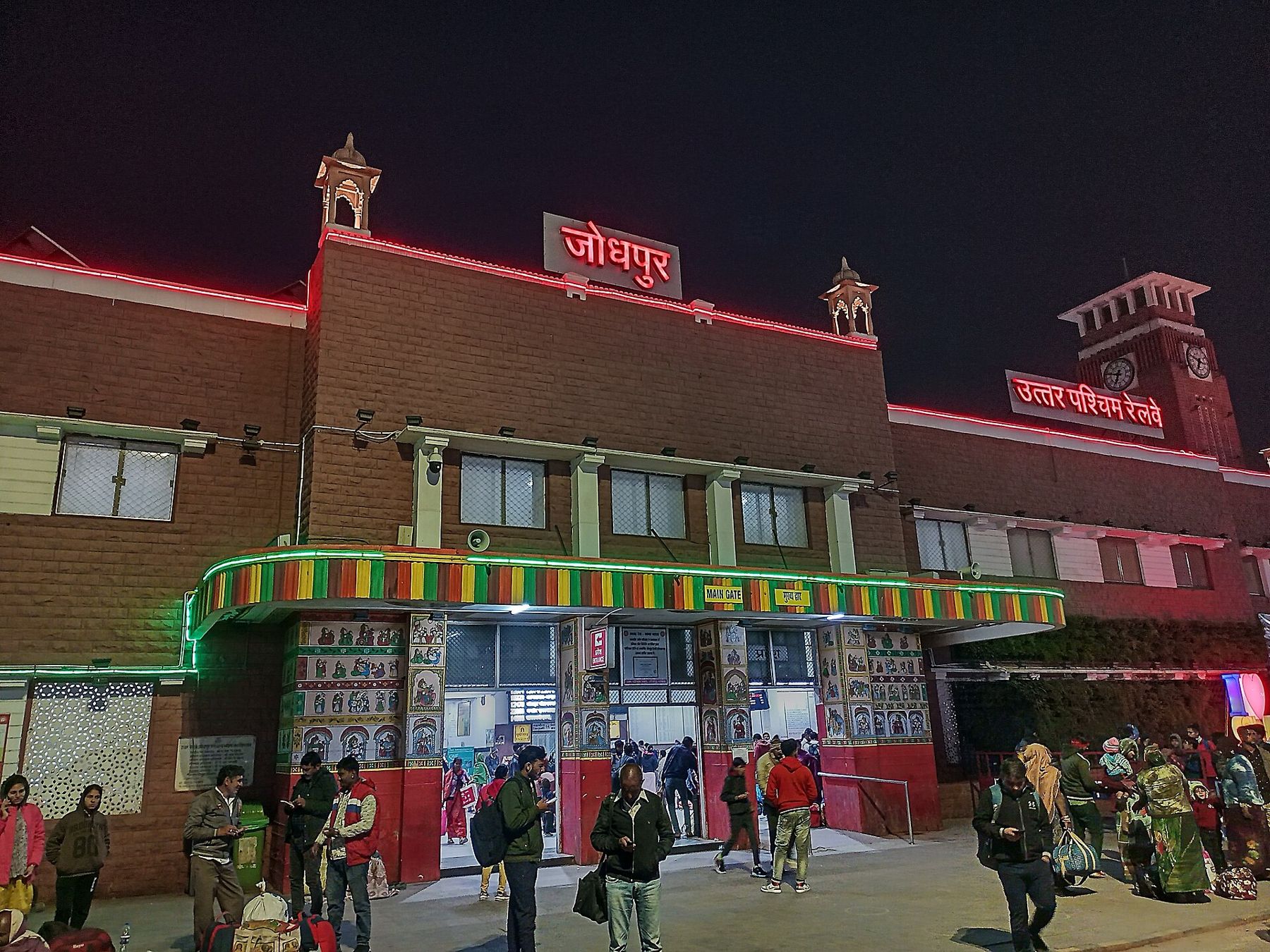
The railway is the gentlest way into the Thar. From Jaipur, lines run west to Jodhpur and on to Jaisalmer, close to the Pakistani border, covering the heart of this guide's journey. Trains are cheap, mostly reliable, and full of Indian travellers going about their lives, and watching the land change from the window, from green fields to dry scrub to open sand, is an experience in itself. This page covers how the line works; a separate page explains how to book.
The line west
Jaipur Junction, the main station of the state capital, has trains in every direction. Heading west, the line passes through Ajmer or runs more directly toward Jodhpur, depending on the train, taking roughly five to six hours. Jodhpur Junction, below the fort, is a major railway hub. From there, the line to Jaisalmer heads northwest through Pokaran into the true desert, another five to six hours, ending at Jaisalmer's small station on the edge of town.
Some trains run straight through from Delhi or Jaipur to Jaisalmer overnight, and some run only on certain days of the week. Timetables change often, and new trains are added from time to time. Look up current trains before you plan.
The railway reached the desert in stages. Jodhpur's line was built by the princely state of Marwar in the late 19th century, and its own railway workshops and grand station buildings date from that time. The line to Jaisalmer was extended much later, and for decades the town was among the most remote railheads in India. Today the route also carries the soldiers and supplies of the border region, and you will often share the train with men in uniform travelling to and from their posts.
Day trains or night trains
A day train lets you watch the landscape. Between Jodhpur and Jaisalmer, especially, the view becomes more and more desert-like, with sand along the tracks, herds of goats and camels, isolated villages and wind turbines on the ridges. In winter, a day trip on this stretch is a pleasure.
A night train saves a day and a night's accommodation, and in the hot months it is far more comfortable. You board in the evening, sleep in a berth and wake near your destination. Night trains into Jaisalmer arrive early in the morning, as the light comes up over the desert.
The classes, explained
Indian trains have several classes of travel, and choosing the right one makes a big difference. On long-distance trains, the main reserved classes are:
- First AC (1A): lockable cabins of two or four berths, the most private and expensive. Not on every train.
- AC two-tier (2A): open-plan carriages with berths in two tiers and curtains, bedding provided.
- AC three-tier (3A): three tiers of berths, air-conditioned, bedding provided. The most popular choice for many travellers.
- Sleeper (SL): three tiers of berths without air-conditioning, with open windows and fans; cheap, busy and lively.
- AC chair car (CC): reclining seats on day trains.
Unreserved general carriages are very crowded and not recommended for long journeys. The names and mix of classes vary by train.
For a first journey, AC three-tier is a good compromise between comfort and cost, with clean bedding, air-conditioning and plenty of fellow travellers. Sleeper class is cheaper and more sociable, and in the cool season its open windows let you feel the desert air, but it can be crowded, and in winter the nights are cold without bedding of your own.
Another step · The desert lineBooking windows, waitlists and the quota system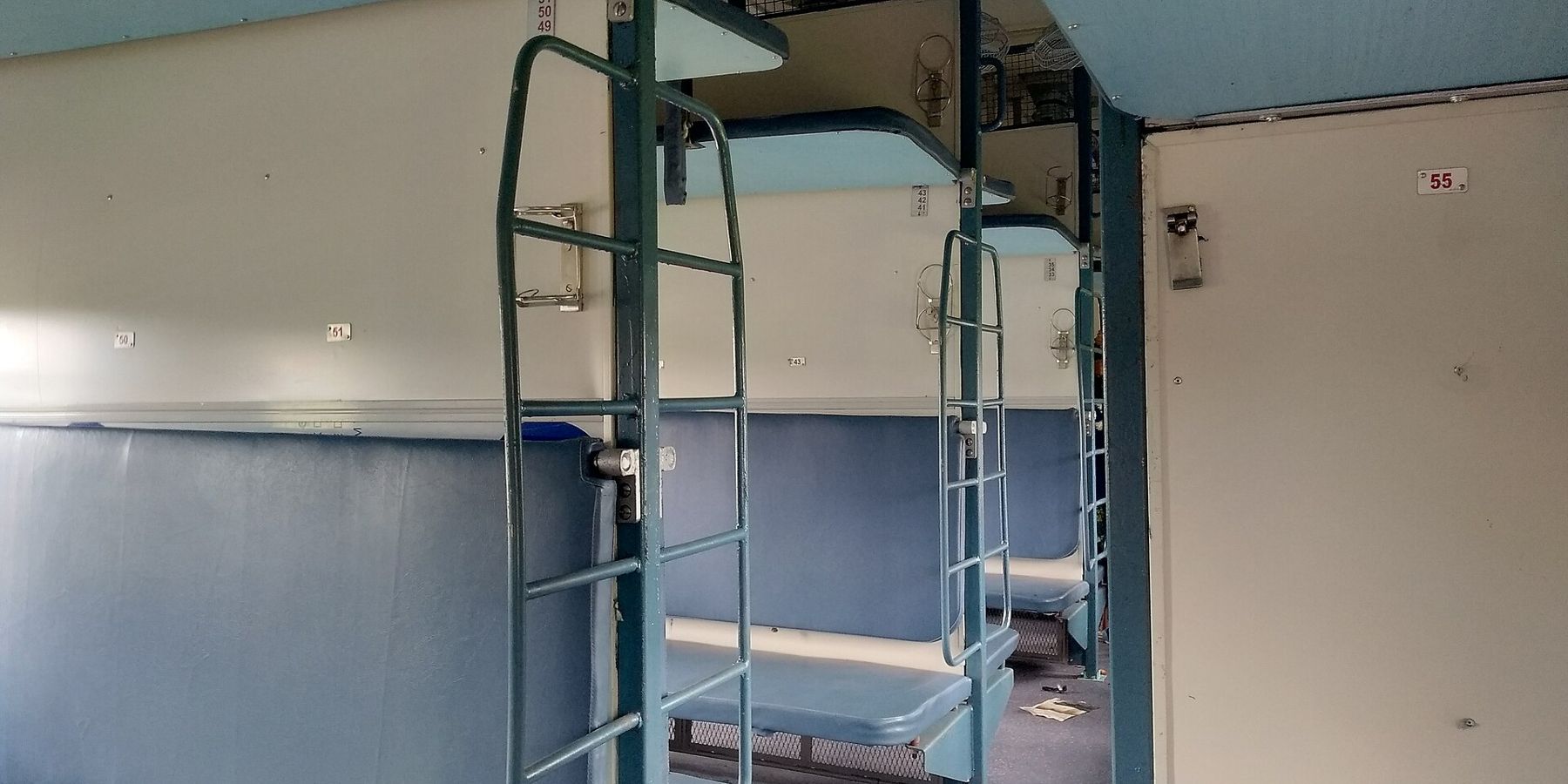
Life on board
On most trains, vendors pass through selling tea, coffee, snacks and simple meals, and on some trains meals can be ordered ahead. Station platforms have stalls too. Carry water and some food of your own, especially on the Jaisalmer stretch, where options are fewer.
Keep your valuables with you, and on night trains, many travellers chain their bags to the fittings under the seat; a small padlock and chain are sold at most stations. Lower berths are convenient for sitting during the day; upper berths are the most private at night. Fellow passengers are usually friendly and curious, and the long journeys often turn into conversations.
Women travelling alone often prefer the AC classes, where carriages are calmer and berths can be chosen with care, and some trains have reserved quotas for women. Toilets are basic, with both Indian and Western styles on most coaches; carry tissue and hand sanitiser.
What the window shows
Leaving Jaipur, the line runs through farmland and low hills. Approaching Jodhpur, the land dries out, with rocky outcrops and thorny trees, and you may catch sight of Mehrangarh on its rock as the train comes in. West of Jodhpur, the land opens up, and after Pokaran, where India carried out nuclear tests, the desert takes over: sand, scrub, the occasional village of round huts, and herds moving across the plain. In winter, migrating birds gather on the few pools.
Look out, too, for the stations themselves, many with old buildings of local stone, water towers and small platforms where the whole village seems to come to meet the train.
Arriving
At each end, auto-rickshaws and taxis wait outside the station; agree the fare before you get in, or use prepaid booths where they exist. At Jaisalmer, the station is a short ride from the fort. Touts sometimes meet trains offering accommodation and desert trips; it is better to arrange things yourself. For booking, waitlists and quotas, see the page on booking windows, and for the places at either end, the pages on Jaisalmer Fort and Mehrangarh.
Lenses on this page
- Kishlay RF · CC BY-SA 4.0
- Vikramaditya V. V · CC BY-SA 4.0
All photographers, all pages: whose lenses.