The edge of the Thar: dunes, Kuldhara and the empty roads
West of Jaisalmer, the land opens into scrub, rock and dunes. A day out on the empty roads takes in an abandoned village, royal cenotaphs and the sand at sunset, and asks a few questions about camels.
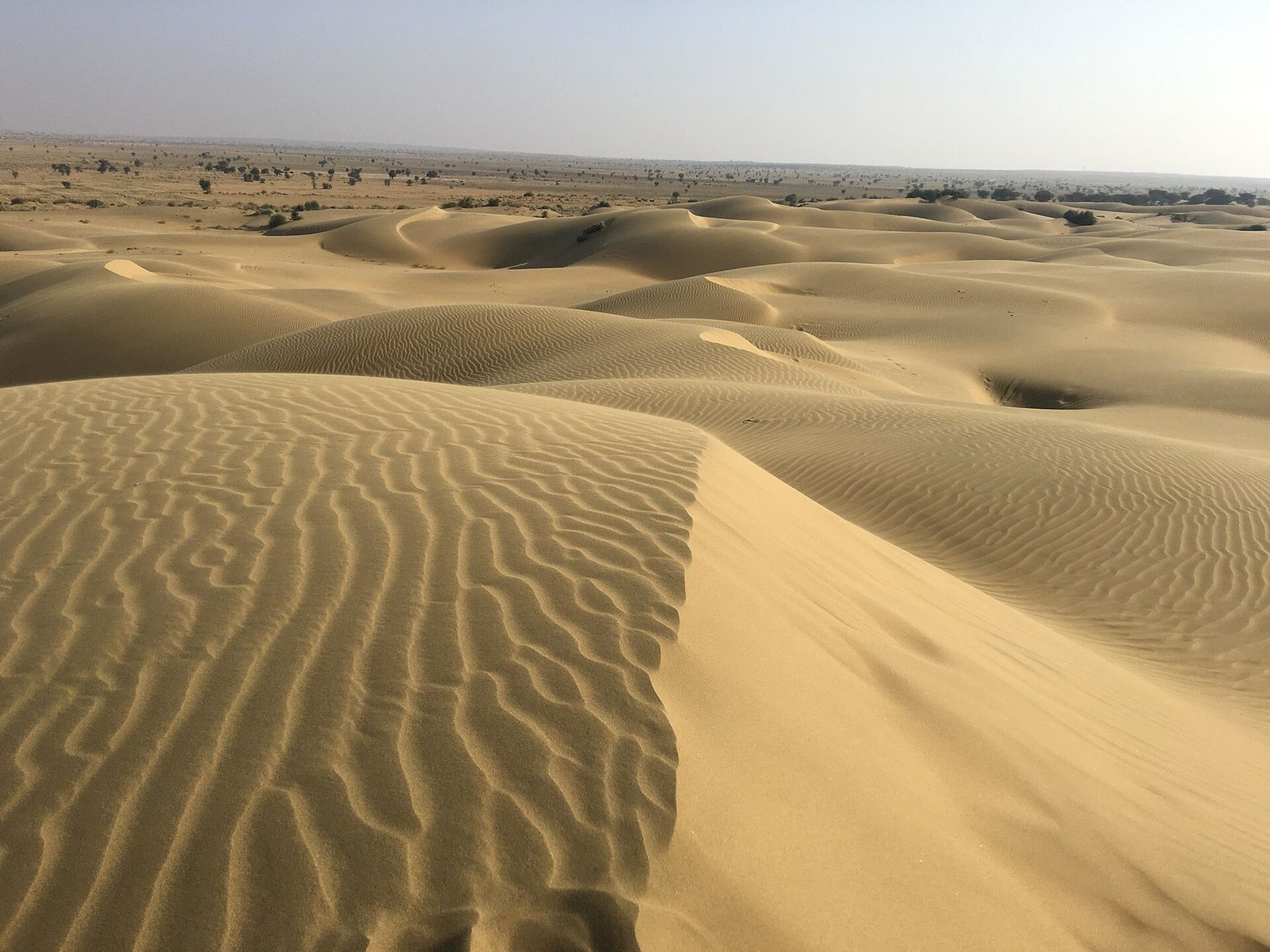
Jaisalmer sits near the heart of the Thar, the great desert that stretches across western Rajasthan into Pakistan. Much of it is not sand at all but scrubland, rocky plains and low hills, dotted with villages, wind turbines and herds of goats and camels. The dunes that people picture lie in patches, the best known near the villages of Sam and Khuri, west and southwest of the town. A day on the roads around Jaisalmer shows the desert in all its forms.
Bada Bagh
A few kilometres north of the town, Bada Bagh is a group of royal cenotaphs, chhatris, built from the 16th century onward to honour the rulers of Jaisalmer. They stand on a low ridge above an old garden and dam, domed pavilions of yellow sandstone in rows, with carved columns and inscriptions. Behind them, modern wind turbines line the ridge, an unexpected and striking combination. Sunrise and sunset are the best times here.
Kuldhara
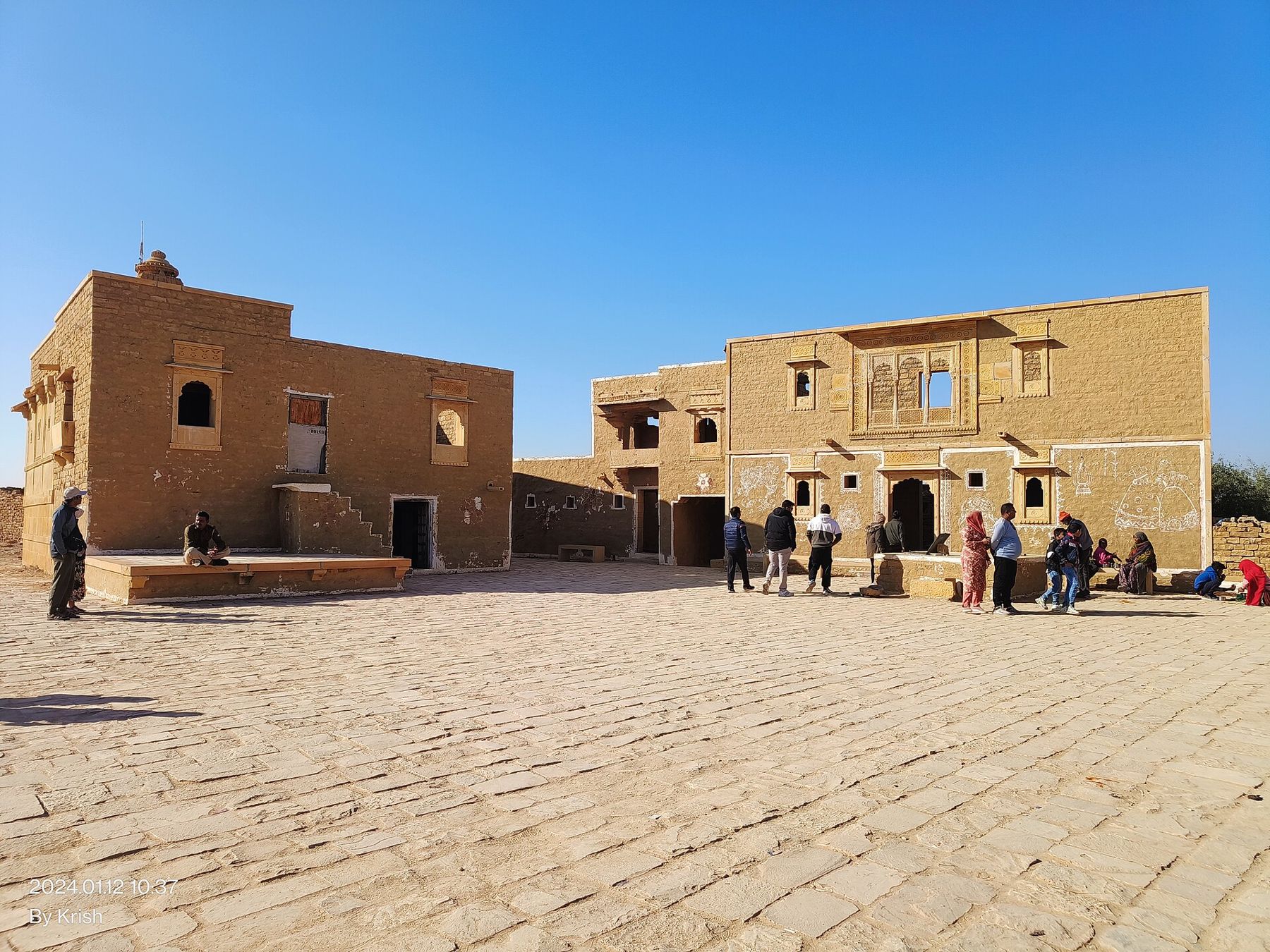
West of Jaisalmer, Kuldhara is an abandoned village of sandstone houses, laid out on a grid of streets, with a temple at its centre. It was one of a group of villages belonging to the Paliwal Brahmins, a prosperous farming community, who left the area in the early 19th century. The most popular story says they left overnight, all together, to escape the demands of the prime minister Salim Singh, and cursed the village so no one could live there again. Historians suggest other causes, including heavy taxation, drought and the decline of the region's economy.
Today the village is a protected site, partly restored, with walls, doorways and the temple standing in the silence. It is often called haunted, which brings crowds at times; go in the morning for quiet. Treat it with the respect due to a place that was once a home.
Nearby, the abandoned village of Khaba, with a small fort on a ridge, tells a similar story and sees fewer visitors. Both villages show how the Paliwals built: stone houses with courtyards, wells and tanks, and fields carefully watered by channels from rain catchments. Their skill at farming in the desert was famous, and their departure left the land empty.
Desert National Park
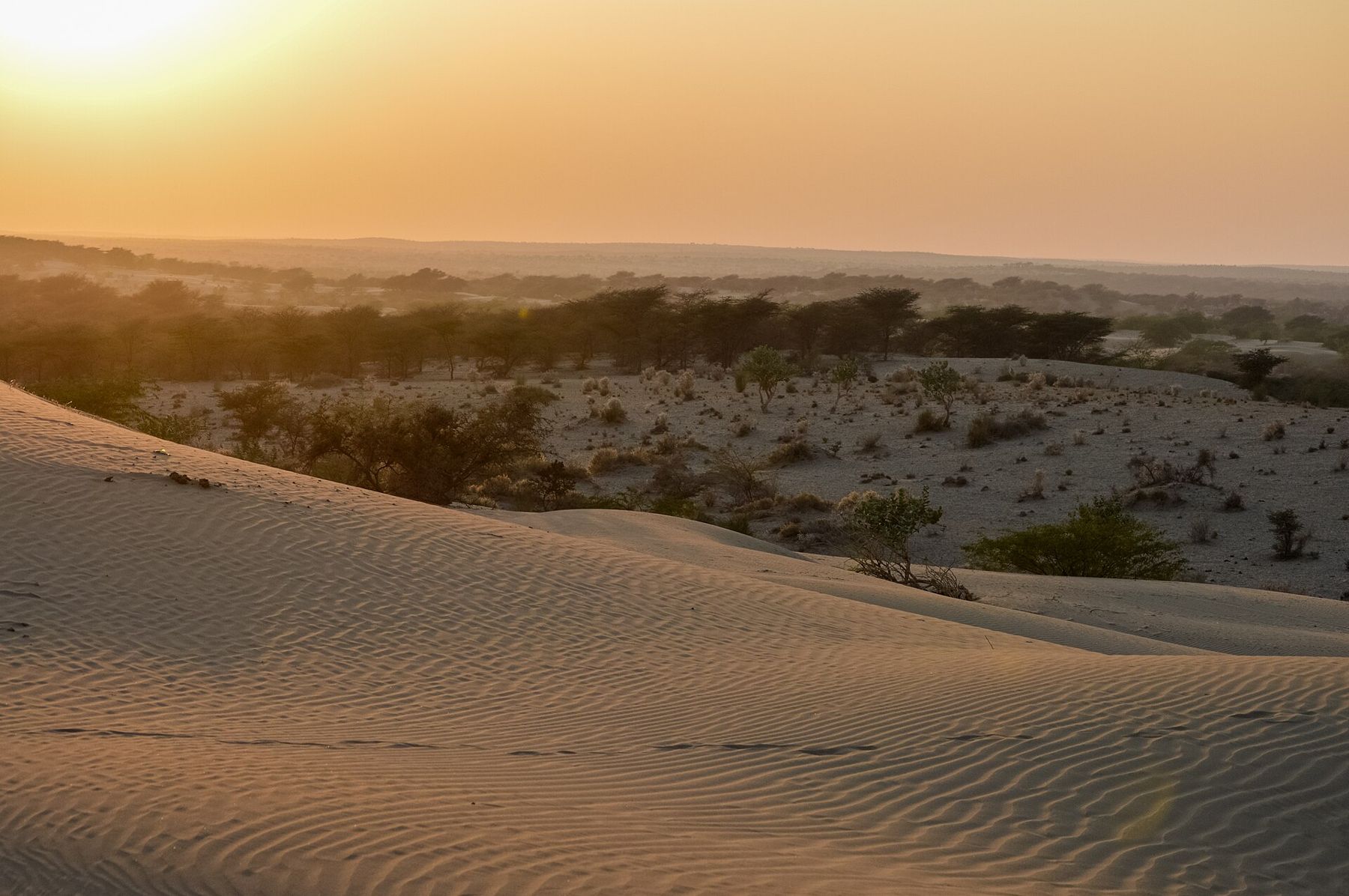
Southwest of Jaisalmer, the Desert National Park protects a large area of the Thar's grasslands, dunes and rocky plains. It is one of the last refuges of the great Indian bustard, a large and critically endangered bird, as well as desert foxes, chinkara gazelles, and many birds of prey, especially in winter. Much of the park is restricted, and entry to some areas requires permits; check the current arrangements with the forest department before you go. Even from the roads that cross it, the landscape of open grassland gives a sense of the desert's scale.
Another step · JaisalmerHavelis and Gadisar Lake below the fortThe dunes at Sam and Khuri
The Sam dunes, about forty kilometres west of Jaisalmer, are the most visited, with large ridges of sand close to the road. In the evening, crowds arrive for camel rides, music and sunset, and the area can feel like a fairground. The dunes at Khuri, to the southwest, are generally quieter, with a traditional village nearby. Both are best in the late afternoon, when the light softens and the heat of the sand fades.
The dunes shift with the wind, and their shapes change from season to season. Walk away from the busy edges, even a few hundred metres, and you will soon find quiet ridges with ripple patterns and the tracks of beetles and lizards. Bring sunglasses and a scarf: even a light breeze carries sand. For the cleaner, quieter landscape of the Thar, the fossil park at Akal, with its petrified tree trunks around 180 million years old, makes an interesting stop on the way back toward the town.
Many visitors spend a night in a desert camp. Quality and character vary enormously, from simple tents to large commercial sites with loud entertainment; choose carefully, read recent reviews and ask exactly what is included and how waste is handled.
Camels and their welfare
Camel rides are a big part of the desert trade, and they provide incomes in a poor region. But welfare varies. Look for animals that are well fed, without sores or injuries, and handlers who treat them calmly. Avoid rides that look rushed or overloaded, and do not ride in the hottest hours. A jeep or a walk on the dunes is a fine alternative. The same applies to the decorated camels offered for photographs in town.
Cold nights and empty roads
The desert has extreme temperatures. In winter, days are warm but nights can fall close to freezing, so bring warm layers for any evening out. In summer, from April to June, daytime heat is dangerous and the dunes are best avoided. Dust storms can blow up in spring and early summer.
Roads are generally good but long and empty, with few services. Hire a car or jeep with a driver from Jaisalmer, carry water and plan your return before dark. The border area to the west is under military control, and some roads are closed to visitors; follow local rules. Back in town, the havelis and the lake make a good morning before the desert, and the walls of Jaisalmer Fort look their best as you drive back in at dusk.
Lenses on this page
- Roshanrajverma · CC BY-SA 4.0
- कृष्ण कान्त शर्मा · CC BY-SA 4.0
- Timothy A. Gonsalves · CC BY-SA 4.0
All photographers, all pages: whose lenses.