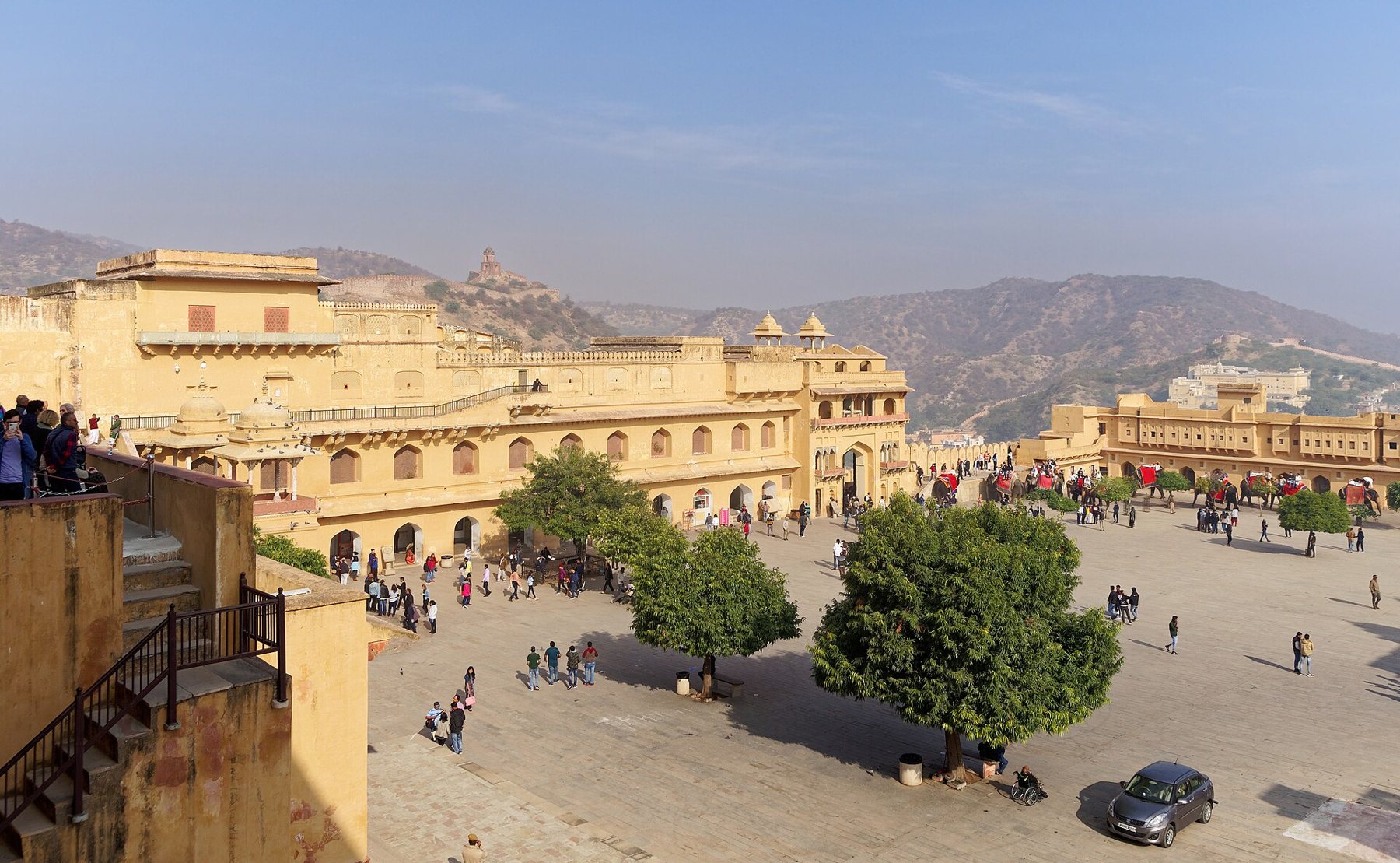
Amber, also written Amer, was the capital of the Kachhwaha Rajput rulers for more than six centuries before they moved down to the plain and founded Jaipur in 1727. Their palace-fortress stands on a ridge above the old town of Amer, about eleven kilometres north of Jaipur, with Maota Lake at its feet and long walls snaking over the hills behind. It is one of the great sights of Rajasthan and, since 2013, part of the UNESCO World Heritage listing of the Hill Forts of Rajasthan. It is also very popular, so when you go makes all the difference.
Up the ramp, on foot
The main approach climbs from the lakeshore by a long cobbled ramp to the Suraj Pol, the Sun Gate, on the east side of the fort. For many years, visitors were carried up on the backs of elephants, and some still are. The welfare of these elephants has been a serious concern for animal-welfare groups and for the authorities, and walking is the better choice: it takes fifteen to twenty minutes at an easy pace, with views back over the lake and the old town opening up as you climb.
Inside the Sun Gate, the Jaleb Chowk is a great open courtyard where soldiers once mustered. From here, stairs lead up to the palace proper, built in stages from the late 16th century onward, mostly under Raja Man Singh, the first ruler of that name, and his successors.
Man Singh was one of the most powerful generals of the Mughal emperor Akbar, and the alliance between the Kachhwaha house and the Mughals brought Amber great wealth. That partnership shows in the architecture, where Rajput forms, such as domed pavilions and overhanging balconies, mix with Mughal ideas of formal gardens, cusped arches and inlaid marble. Walking through the fort, you can see the meeting of the two traditions in almost every room.
The Shila Devi temple, just off the Jaleb Chowk, is dedicated to the family goddess of the Kachhwaha rulers, and its silver doors are still used for worship. Remove your shoes and respect the rules if you go in; photography is often not allowed inside.
The courtyards of the palace
The palace rises through a series of courtyards, each more private than the last. The first holds the Diwan-i-Aam, the hall of public audience, an open pavilion of red sandstone and cream marble columns. Beyond it, the Ganesh Pol, a gateway covered in painted and inlaid decoration, leads into the private quarters.
Here, around a formal garden, are the Jai Mandir, with its famous Sheesh Mahal, a hall whose walls and ceilings are set with thousands of small mirrors and pieces of coloured glass, and opposite it the Sukh Niwas, where water channels once cooled the air. In the old days, a single candle was said to make the Sheesh Mahal glitter like a starry sky. Today, the mirrors are best seen in the morning, before the crowds fill the room.
The gardens between the two halls were laid out in the Mughal style, divided by water channels into geometric beds. Water was lifted from the lake below by a system of wheels and channels, a remarkable feat of engineering on a dry hilltop, and it ran through the Sukh Niwas in a marble channel to cool the air before falling into the garden. Imagining the water running helps the whole courtyard make sense.
Another step · JaipurPanna Meena ka Kund: the stepwell behind AmberThe zenana and the oldest palace
Behind the private courtyard lies the oldest part of the palace, built for Raja Man Singh around 1600, with a large courtyard surrounded by apartments for the women of the household, the zenana. Its maze of small rooms and connecting passages was designed so the ruler could visit his queens without being seen. It is quieter than the showpiece rooms, and from its upper windows you look down over the lake and the town.
Throughout the palace, look at the small details: the jali screens of carved stone, the painted floral panels, the marble reliefs of flowers and vases, and the way light falls through latticed windows.
Allow two to three hours for the palace alone, more if you want to explore the upper terraces, the bath rooms and the many staircases. Guides can be hired at the entrance; agree the price and the length of the tour before you start, and do not feel obliged to visit any shop afterwards.
In the old days, a single candle was said to make the Sheesh Mahal glitter like a starry sky.
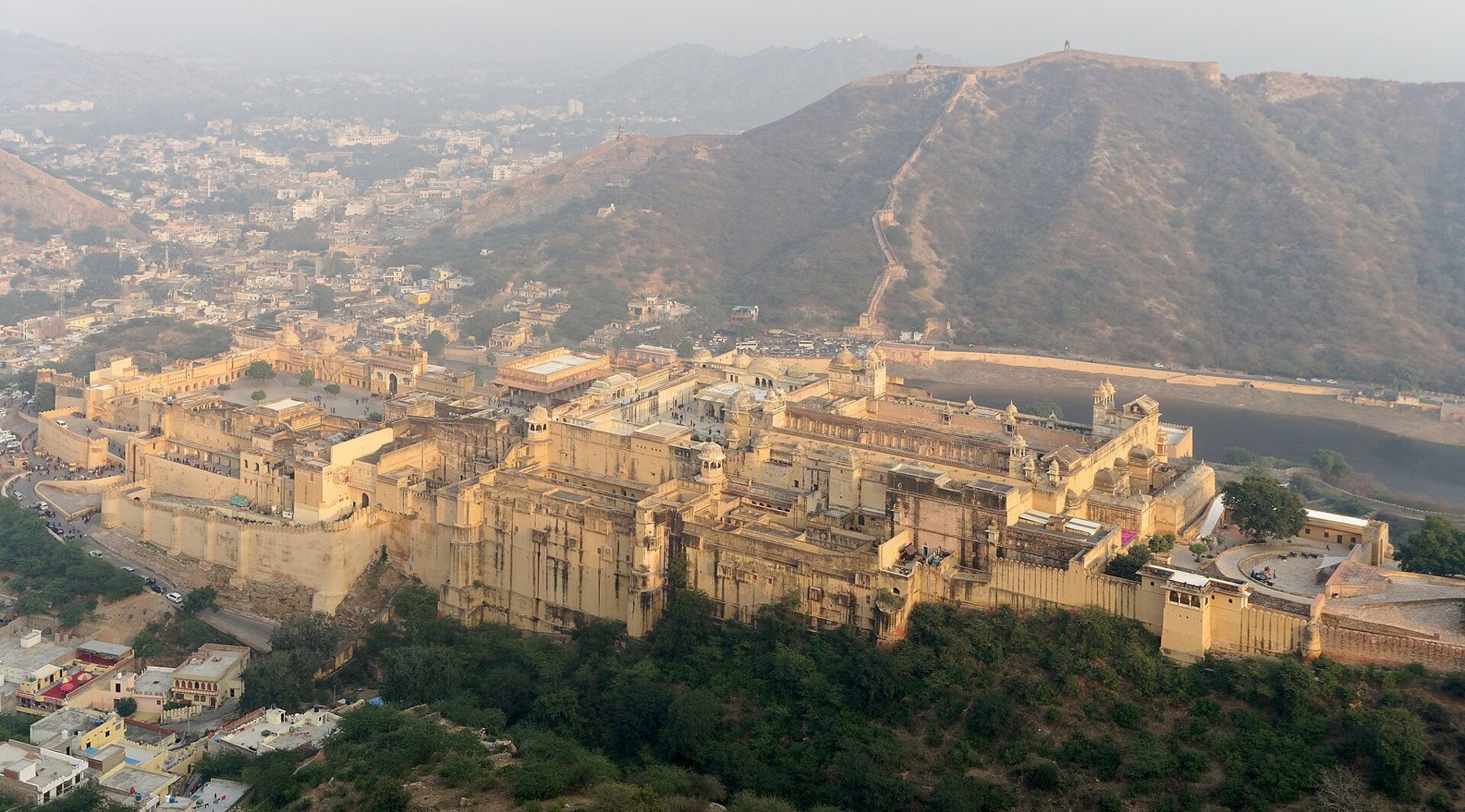
Maota Lake and the saffron garden
Maota Lake below the fort was part of its water system, collecting rain from the surrounding hills. In its middle, a geometric garden of terraces and flower beds, the Kesar Kyari, was laid out in the shape of star-like beds and is said to have once grown saffron. Seen from above, from the palace windows, the pattern is clear; in a dry year, the lake can shrink away, but after a good monsoon it reflects the fort beautifully.
Along the walls to Jaigarh
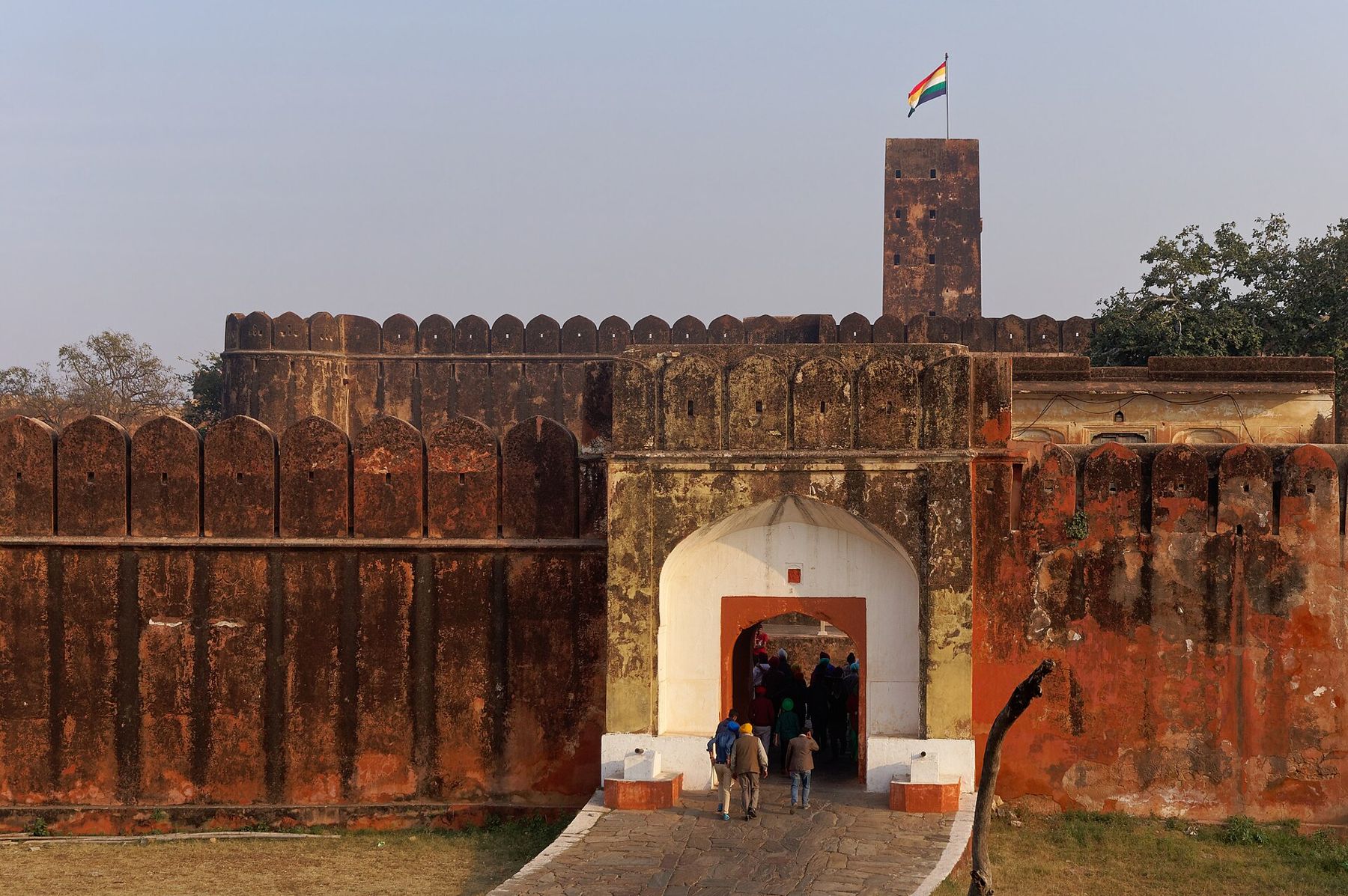
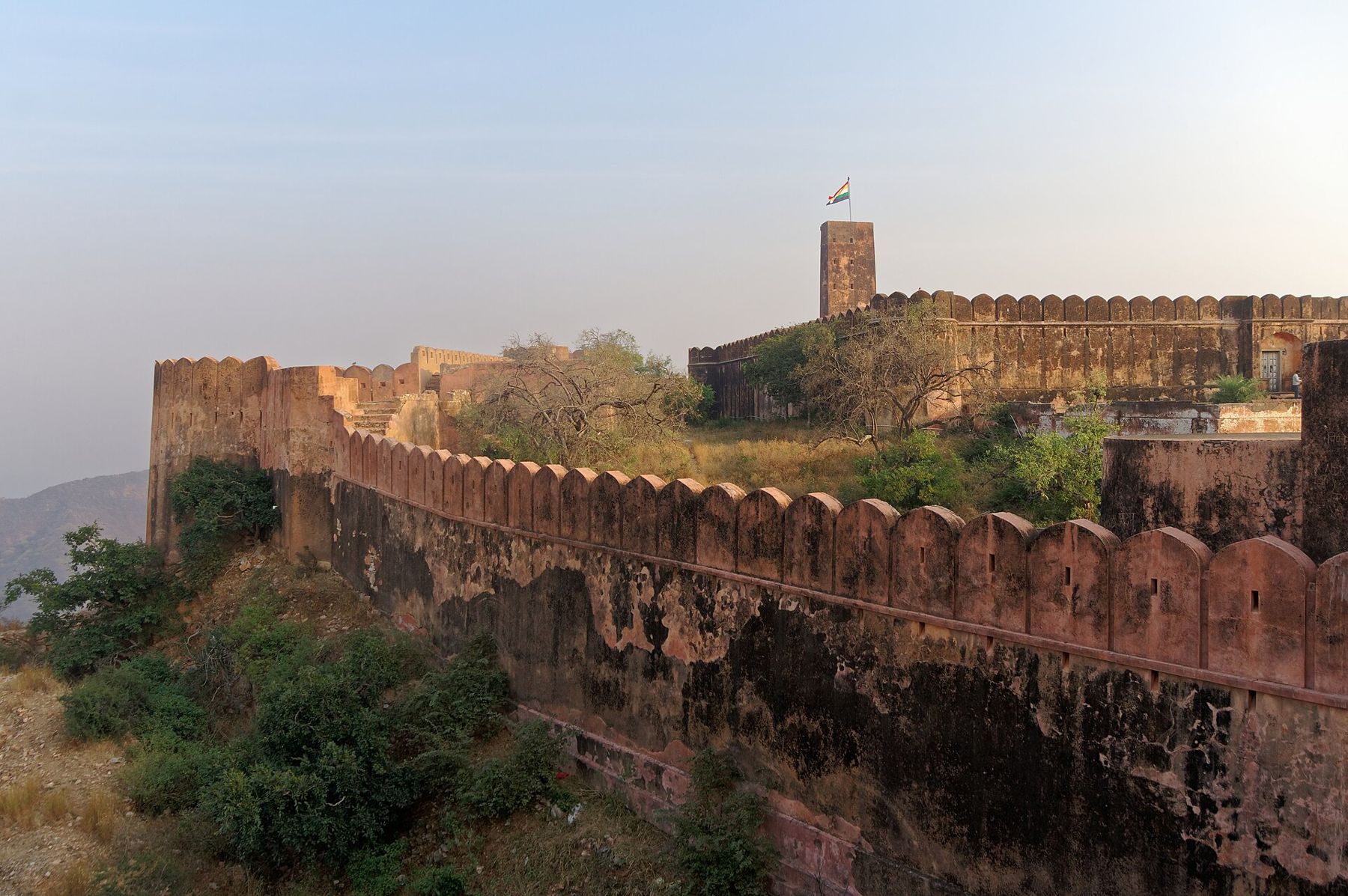
Above Amber, on the summit of the ridge called the Cheel ka Teela, the Hill of Eagles, stands Jaigarh Fort, built to protect Amber and linked to it by fortified walls and passages. It holds the Jaivana, a huge cannon on wheels said to be one of the largest of its kind, along with reservoirs, a palace and long views over the hills. The walk up from Amber is steep and hot; many people go by road instead. Nahargarh Fort, along the same ridge, looks down over Jaipur and is a favourite place to watch the sunset.
The long walls that run along the ridges between the forts can be seen from the palace terraces, rising and falling over the hills like a smaller Great Wall. They enclosed a whole defensive system: watchtowers, tanks and gates, designed to protect the capital in a landscape where every hilltop could be a lookout.
Reaching Amer, and when
City buses run from Jaipur to Amer, and taxis and auto-rickshaws are easy to find. Arriving at opening time, around eight in the morning, gives you an hour or two of relative calm. The fort also holds an evening sound and light show. Ticket arrangements, including combined tickets with other Jaipur monuments, and opening times change, so check before you go.
From November to February, mornings are cool and clear, perfect for walking. From April to June, the heat is fierce by mid-morning, so go very early. Combine the fort with a visit to the small stepwell of Panna Meena ka Kund in Amer village, and spend the afternoon in the walled city of Jaipur.
Lenses on this page
- Jakub Hałun · CC BY-SA 4.0
- Jakub Hałun · CC BY-SA 4.0
- Jakub Hałun · CC BY-SA 4.0
- Jakub Hałun · CC BY-SA 4.0
All photographers, all pages: whose lenses.